
The Creative Revolution of AI Agents: Why Human Vision Matters More Than Ever
Every major technological shift has created the same question: does new technology expand human creativity or replace it? From early mechanical inventions to digital tools, each breakthrough has challenged creators to rethink their role.
The arrival of agent-based AI brings that conversation back again. These systems can understand goals, make decisions, complete multi-step tasks, and operate with increasing independence. The concern is familiar: will automation reduce the role of creative professionals?
History suggests another possibility. New tools often become extensions of human imagination. What begins as uncertainty eventually becomes a new creative language. The important factor is whether these technologies are designed to support creators or remove them from the process.
AI agents have the potential to transform creative work, but their value depends on keeping human judgment at the center. The future is not about machines replacing ideas. It is about giving people more power to turn ideas into reality.
The next generation of creative tools is moving toward a model where people act as directors of their own creative process. Instead of manually controlling every technical step, creators can describe their intent, define the mood, make artistic decisions, and allow AI to handle repetitive production tasks.
In this model, the creator remains responsible for the vision. AI becomes the assistant that organizes workflows, connects tools, manages details, and helps bring concepts to life faster.
This represents a major change in how digital creation works. For decades, creative software has been built around menus, panels, commands, and precise manual adjustments. These tools gave creators incredible control, but they also required learning complex interfaces and spending time on technical execution.
AI-powered workflows introduce a more conversational approach. Instead of thinking about which button to press or which tool to open, creators can focus on what they want to communicate, what emotion they want to create, and how they want their audience to respond.
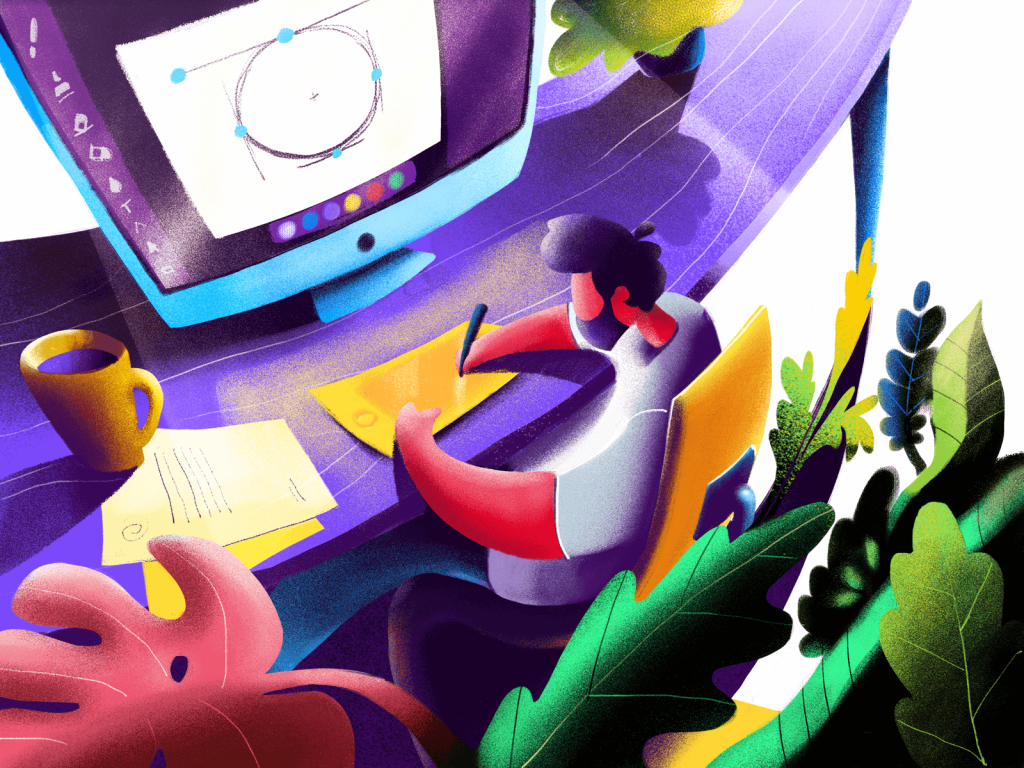
The role of the creator becomes closer to that of a creative director.
A designer developing a personal identity could begin with a simple idea, explore visual directions, refine concepts, create assets, and ask AI to help develop supporting materials. A video creator could describe the feeling they want, then use AI assistance to organize footage, suggest edits, create variations, and prepare content for different formats.
The human still decides what feels right. The AI helps reduce the distance between imagination and execution.
This does not mean traditional creative skills disappear. There will always be moments when precision matters, when every detail requires direct control, and when creators need to personally shape the final result.
Professional tools remain essential because they provide the depth, flexibility, and accuracy required for high-quality work. AI does not remove the need for expertise; it changes where expertise is applied.
Instead of spending all their energy on repetitive tasks, creators can focus more on taste, storytelling, strategy, and emotional impact.
AI agents also introduce a new way of working across creative applications. Rather than treating each tool as a separate environment, future workflows may connect different stages of production through a single intelligent assistant.
A creator could move from idea generation to design, editing, writing, and publishing while maintaining the original vision throughout the process. The AI would help coordinate the work while the person remains in control of the final direction.

This approach can also reshape professional creative teams. Businesses often struggle with producing enough content while keeping quality and brand consistency. AI agents may become another member of the creative workflow, supporting teams by handling repetitive production tasks.
Marketers can define goals, designers can maintain quality standards, and AI systems can assist with variations, adjustments, and organization.
Over time, these systems may become more useful as they learn the patterns behind a brand’s style, previous creative decisions, and communication approach.
AI creativity is also expanding beyond traditional software environments. Future creative assistants may exist wherever people already work, allowing users to edit, create, and refine ideas through the platforms they use every day.
The biggest opportunity is accessibility. More people may be able to express ideas visually, experiment with new formats, and create professional-quality work without needing years of technical training.
However, there is also a risk.
If AI-generated content becomes focused only on speed and efficiency, creative output could become repetitive and disconnected from human experience. A world filled only with automated creations may lose personality, originality, and emotional meaning.
The challenge is not whether AI can create. The challenge is ensuring that human perspective remains the source of creativity.
The best future is one where technology expands imagination instead of replacing it. AI should remove unnecessary friction while preserving the personal decisions, imperfections, and unique viewpoints that make creative work meaningful.
The next era of creativity will belong not only to those who know how to use tools, but to those who know how to guide them with vision, intention, and taste.